Best Lightweight Conditioners for Fine Hair (That Don’t Flatten It)
This article contains affiliate links.
If you have fine hair, conditioner can feel like a bit of a gamble.
Use too much, and your hair can look flat, greasy, limp, or stringy within hours.
Use too little, and the ends can feel dry, fluffy, rough, or impossible to style.
So what does fine hair actually need?
Usually: a lightweight conditioner that softens the hair without coating it too heavily.
That’s the sweet spot.
In this guide, I’ll explain:
What fine hair really needs from a conditioner, what usually makes conditioner feel “too heavy” and what types of lightweight conditioners tend to work best.
Why Fine Hair Still Needs Conditioner
Fine hair is often avoided when it comes to conditioner because it can feel like it makes hair greasy.
That makes sense — but in most cases, fine hair still needs conditioning.
Why?
Even if your roots get oily quickly, your mid-lengths and ends can still become:
- dry
- tangly
- fluffy (without real volume)
- rough at the ends
- fragile and prone to breakage
- thin-looking and lacking body
This is especially common if you:
- wash your hair frequently
- rely on dry shampoo between washes
- use heat styling regularly
- colour your hair
Signs Your Fine Hair Needs Conditioner
• Feels dry or straw-like through the mid-lengths
• Tangling easily, especially after washing
• Lacking shine and looking dull
• Ends feel rough or brittle
• Hair feels “fluffy” but not in a full, healthy way
• More prone to static or frizz
So the goal isn’t to avoid conditioner completely.
The goal is to find one that: hydrates lightly without flattening the hair.
Conditioner Quick Picks
Conditioner for fine hair needs to be lightweight, non-coating, and kept off the roots, otherwise it flattens instantly.
Quick Picks: Best Conditioners for Fine Hair
Best Overall:
L’Oréal Elvive Hydra Hyaluronic Conditioner
Best for: Lightweight hydration without heaviness
A really good all-rounder for fine hair. Adds moisture and softness without flattening the roots or leaving residue. Great if your hair feels dry but still gets greasy quickly.
Best Lightweight Option:
OGX Biotin & Collagen Conditioner
Best for: Fuller-feeling hair without buildup
Helps fine hair feel thicker and healthier while staying light. Ideal if your hair lacks body but gets weighed down easily.
Best for Oily Roots & Fine Hair:
Pantene Pro-V Volume & Body Conditioner
Best for: Conditioning without greasy roots
Designed for finer hair types, this keeps lengths soft without overloading the scalp. Good everyday option.
Best Professional Feel:
Redken Volume Injection Conditioner
Best for: Salon-style volume and softness
Adds body and movement while still conditioning properly. A great step up if you want a more premium finish.
Best Salon Option for Fine Hair:
Olaplex No.5 Bond Maintenance Conditioner
Lightweight repairing conditioner that strengthens fine hair without weighing it down.
Best for: Strength + softness without heaviness
This is a brilliant step up if you want that “salon result” feel at home. It strengthens fine hair while still rinsing clean, so you don’t get that coated, heavy finish.
If your hair goes flat easily, focus conditioner on the mid-lengths and ends only — keeping it away from the roots makes a huge difference. it’s not always the product — it’s usually that it’s too heavy for fine hair.
What Makes a Conditioner Too Heavy for Fine Hair?
The problem usually isn’t “conditioner” itself.
The problem is usually one of these:
1) It leaves too much coating behind
Fine hair gets weighed down quickly, so if a conditioner leaves too much residue, you’ll often notice:
• limp, flat roots
• a sticky or coated feel
• stringy, separated ends
• hair going greasy much faster than usual
• styles dropping out quickly
2) It’s too rich for your hair type
Some conditioners are formulated for:
• very dry or coarse hair
• thick, dense hair types
• naturally curly or textured hair
• highly damaged or over-processed hair
They work beautifully for those hair types…
…but on fine hair, they’re often simply too rich — leaving it heavy, flat, and harder to style.
3) It’s being applied too close to the root
This is one of the biggest reasons people think conditioner “doesn’t suit” fine hair.
In reality, they’re often just putting it too high up.
Fine hair usually does much better when conditioner is applied:
from mid-lengths to ends only
—not on the scalp or root area.
What Fine Hair Usually Needs in a Conditioner
The best lightweight conditioners for fine hair are designed to give:
• light hydration without buildup
• soft, touchable ends
• easy detangling without breakage
• control over static and frizz
• better manageability when styling
…without leaving hair:
• greasy or product-heavy
• limp and flat at the root
• weighed down through the lengths
The best lightweight conditioners for fine hair are designed to give:
• light hydration without buildup
• soft, touchable ends
• easy detangling without breakage
• control over static and frizz
• better manageability when styling
…without leaving hair:
• greasy or product-heavy
• limp and flat at the root
• weighed down through the lengths
Best Types of Lightweight Conditioners for Fine Hair
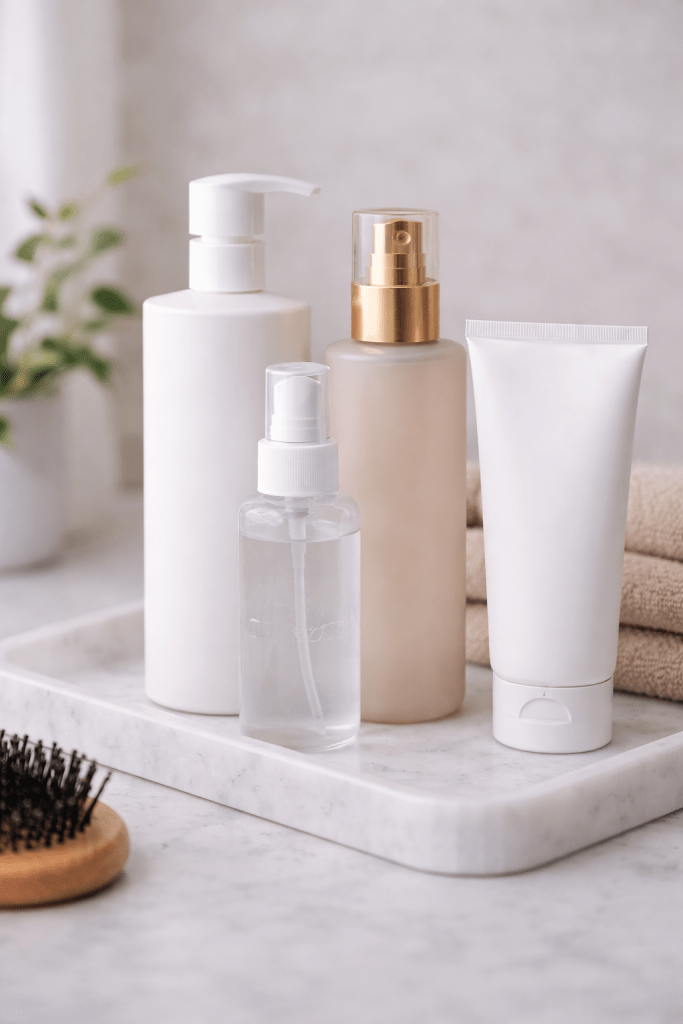
Here’s what usually works best.
1) Volumising conditioners
These are usually the safest starting point for fine hair.
A good volumising conditioner should:
• soften without weighing the hair down
• improve detangling without causing breakage
• avoid heavy buildup or residue
• leave the hair feeling clean, light, and lifted
They’re ideal if your hair tends to:
• fall flat quickly
• feel limp after washing
• go oily at the root too fast
Perfect if you want softness, but still keep movement and natural volume.
These are often one of the safest places to start.
Related reads:
How to Add Volume to Fine Hair
Why Does My Fine Hair Feel Flat After Washing?
2) Light moisture conditioners
Fine hair isn’t always just flat — it can also be dry, fluffy, or more fragile than you’d expect.
In this case, a lightweight moisture conditioner works far better than a rich repair formula.
Look for this type if your hair feels:
• dry at the ends but oily at the root
• fluffy or hard to control after washing
• easily tangled or knotty
• rough due to colouring or heat styling
This helps restore softness and manageability — without sacrificing volume.
Some fine hair isn’t just flat — it’s also dry, fluffy, or fragile.
If that’s you, a very light moisture conditioner can work better than a heavy “repair” one.
These are often better for fine hair that feels:
– dry on the ends
– fluffy after washing
– tangled easily
– rough from colouring or heat
If your roots get greasy but your ends feel dry, this article will help too:
Why Is My Fine Hair So Dry on the Ends?
3) Fine-hair-specific conditioners
Some conditioners are specifically made for:
fine, flat, or thin-looking hair
These are often your best bet because they’re designed to condition without collapsing the shape of the hair.
That doesn’t mean every one will suit everyone — but it usually gives you a much better starting point than a heavy repair formula.
4) Spray or leave-in conditioners (used carefully)
Some fine hair types do better with a very small amount of leave-in conditioner rather than a heavy rinse-out formula.
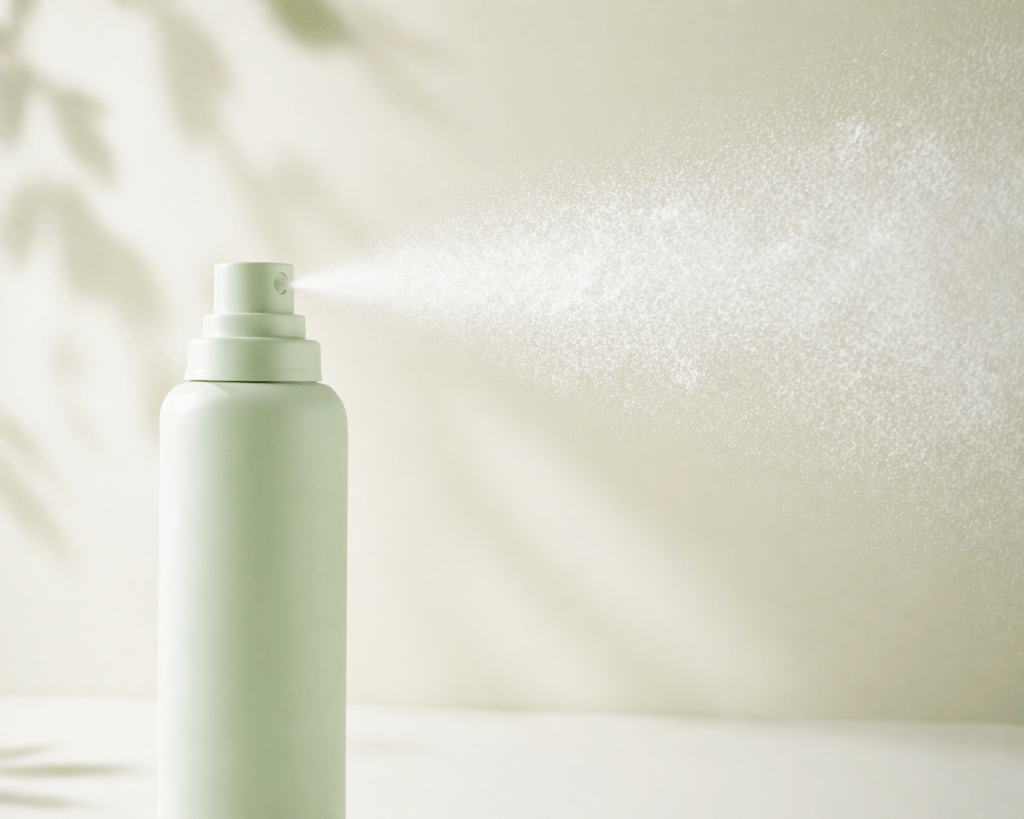
This can work well if your hair is:
– knotty
– flyaway
– dry at the ends
– hard to brush through
The key is:
Very small amount and mainly through the lower lengths.
Too much leave-in on fine hair can backfire quickly.
What to Avoid If Your Fine Hair Gets Flat Easily
Not every product marketed as “hydrating” is right for fine hair.
You may want to be careful with conditioners that feel:
– very buttery
– very oily
– overly rich
– waxy
– coating designed mainly for extremely thick or very damaged hair
These aren’t “bad” products.
They’re just often too much for fine hair unless your hair is heavily processed and genuinely needs it.
How to Use Conditioner on Fine Hair Properly
This matters more than people think.
Even a good lightweight conditioner can feel wrong if it’s used the wrong way.
Best way to apply conditioner to fine hair:
1) Shampoo first
Clean the scalp properly.
This matters because conditioner tends to work better when the roots are actually clean.
If your scalp gets oily quickly, these may help too:
Best Shampoo for Fine Greasy Hair?
Why Does Fine Hair Get Oily Again So Quickly After Washing?
2) Squeeze out excess water
If your hair is dripping wet, conditioner often just slides around and doesn’t work properly.
Gently squeeze out some water first.
3) Apply from mid-lengths to ends
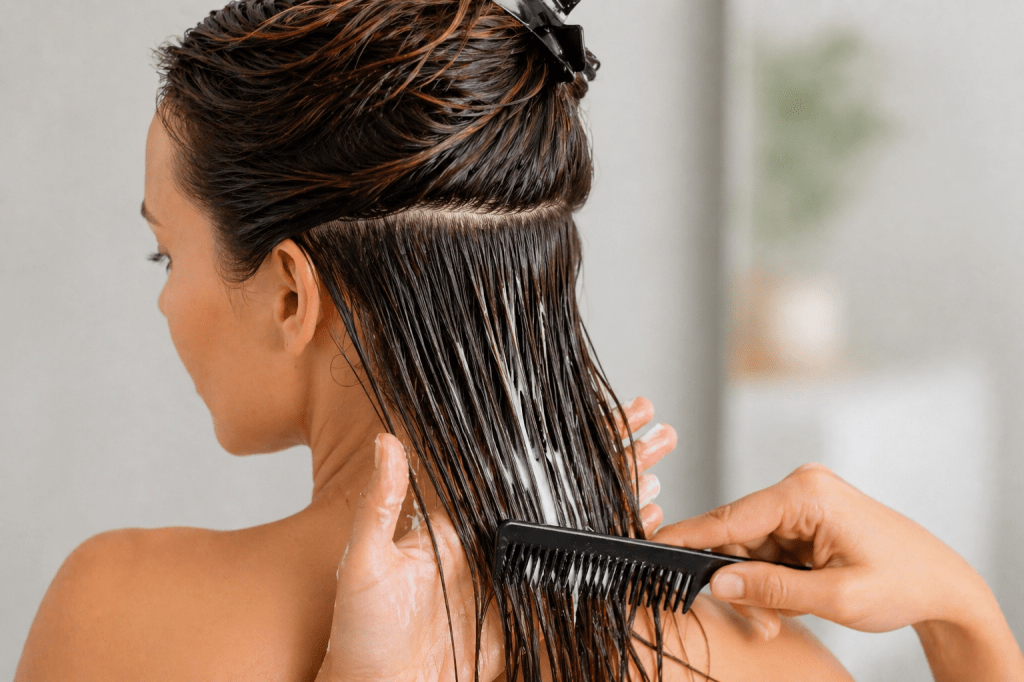
This is the big one.
Avoid putting conditioner directly on the root area if your fine hair gets greasy or flat quickly.
Instead, apply it mainly to:
mid-lengths ends, drier front sections & tangled areas
4) Leave it for a minute or two
You don’t usually need to leave it on for ages.
Fine hair often does better with:
Just enough time to soften without overloading it.
5) Rinse properly
If fine hair feels limp after conditioning, it’s often because it hasn’t been rinsed well enough.
This is especially important around:
– the nape
– behind the ears
– the crown
– underneath layers
Signs Your Conditioner Is Too Heavy
Your conditioner may be too much for your fine hair if:
– your roots look greasy too quickly
– your hair feels coated after drying
– it goes limp fast
– it feels soft but “lifeless”
– your style drops immediately
– it looks stringy instead of fresh
If that happens, it doesn’t necessarily mean your hair hates conditioner.
It usually just means:
you need something lighter.
Signs Your Conditioner Is Actually Working
A good conditioner for fine hair should leave it feeling:
– softer
– easier to brush
– smoother
– less fluffy
– easier to style still
– light enough to move
That’s what you’re aiming for.
– Not heavy.
– Not greasy.
Not “super moisturised” to the point it collapses.
Just:
healthy, soft, manageable fine hair.
Final Thoughts
The best lightweight conditioner for fine hair is usually the one that gives you:
just enough moisture — and no more than that.
Fine hair doesn’t usually need loads of product.
It usually just needs the right amount in the right place.
If your conditioner keeps making your hair feel flat, don’t assume conditioner is the enemy.
More often than not, you just need:
– a lighter formula
– less product
– better placement
And once that’s right, fine hair usually behaves much better.

